

Remote (Camera/Radio) Guidance
The primary purpose of a "remote guided" dog is to gain information that will increase deployment safety, particularly in unknown or difficult-toaccess areas.


Class overview
The primary purpose of a "remote guided" dog is to gain information that
will increase deployment safety, particularly in unknown or difficult-toaccess areas. However it has also been used for supporting tasks such as
placing jammers, retrieving drones, relaying tools, and helping robots
over barriers.
Participants in this course will dive into the steps involved in teaching
dogs to follow radio-guided commands. This training protocol was
developed from over 15 years of experience deploying remote-guided
K9s for reconnaissance and interventions.
The course also explores direct operational feedback and the various
ways in which camera systems can make K9 teams an increasingly
valuable asset to their department.
Class Outline
- History of guiding dogs at distance
> Tools, methods, and major players (Bailey, Prins, Nolan)
> “Directionals” vs “Remote Guidance”
> Evolution of camera systems
> Operational testing and international variations - Detailing of 9-Step protocol for training remote guidance
- Transitioning to radio
> Intermediate steps - Deployment feedback and evolution
- Application for the future
This session explains:
- Detailing of 9-Step protocol for training remote guidance
- Transitioning to radio > Intermediate steps
- Deployment feedback and evolution
- Application for the future
Thomas Schuppe
Thomas is a former member of the GIGN. He combined his expertise in EOD and assault tactics with his talent for dog training, to shape France's first multi-specialty K9 program (assault, explosives detection, camera-guided reconnaissance, and laser targeting). Consequently, K9 teams became an increasingly valuable asset to intervention and reconnaissance teams.
Through his camera-guided K9 project, it quickly became clear that the technology available did not match their training capabilities of guiding dogs over long distances and out of sight. Thomas thus founded the company T&S Concepts. The company dedicated years to developing a dog-mounted camera and radio system that would fit their operational needs: the K9 Vision System. Today the K9VS is used worldwide, in both special operations and traditional K9 units.
Later in he careee , Thomas' focus shifted to making disciplines such as camera guidance and laser targeting accessible to all. He added to his operational role the title of program instructor, and demonstrated that multiple generations of dogs and handlers were capable of learning and sustaining advanced training techniques. Thomas established testing protocols and standards with the Centre National Cynophile de la Gendarmerie, enabling all French national police and military units officially certify K9s in those specialities.
He now pulls from over 20 years of special operations experience to train units worldwide-with the goal of raising standards and demonstrating that K9 programs have more to offer tactical teams.
What past attendees say
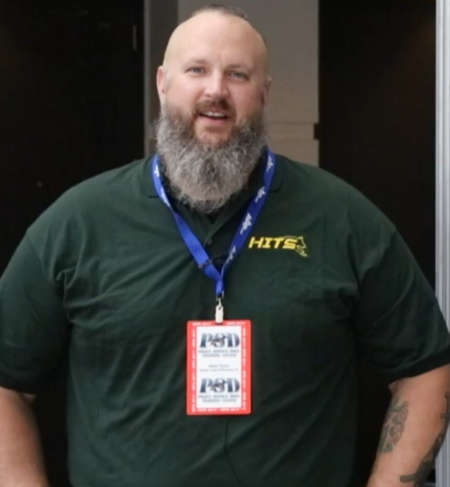
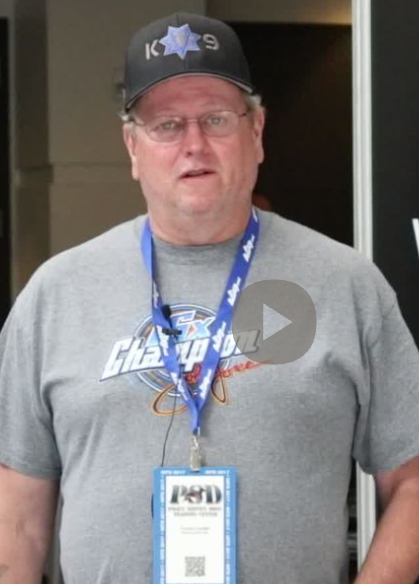
"To the organizers of Handler Instruction & Training Seminar 2026,I was an exhibitor for K9 Tactical Gear Inc at Handler Instruction & Training Seminar 2026. I wanted to express my thanks and appreciation for putting together such a successful event. I had a great experience exhibiting, and everything felt well thought out and organized. I know these events require a lot of hard work behind the scenes, and it showed in how smoothly everything went.Whova was also a great tool to use throughout the event. I relied on it to see who was attending, get updates, and strike up conversations with potential leads. It definitely enhanced my overall experience and helped me make the most out of being an Exhibitor.Best regards,Susan Forbes, K9 Tactical Gear"

"I helped run Twin Oaks Manufacturing’s booth at this event and had such a great time! I especially liked being able to manage our booth profile, see the event schedule, and coordinate demos all through Whova. We had steady traffic and great conversations. Everything ran beautifully, thank you!
"I was part of the Elite Nutrition team and really enjoyed this event, everything was so organized! Having exhibit hall hours and getting live updates in Whova was great. I was never worried I was missing something. We met a lot of attendees and had a fantastic experience. Thanks for hosting!
"Lorem ipsum dolor sit amet, consectetur adipiscing elit. Suspendisse varius enim in eros elementum tristique. Duis cursus, mi quis viverra ornare."
"Lorem ipsum dolor sit amet, consectetur adipiscing elit. Suspendisse varius enim in eros elementum tristique. Duis cursus, mi quis viverra ornare."
"Lorem ipsum dolor sit amet, consectetur adipiscing elit. Suspendisse varius enim in eros elementum tristique. Duis cursus, mi quis viverra ornare."
Secure your seat at HITS 2026
Legal defensibility is not theoretical. It is tested in court.
This class helps handlers and agencies prepare before that moment arrives.

Explore other HITS classes
The Drug Canine Legal Update is one part of a broader HITS program designed to strengthen deployment judgment, detection reliability, and operational decision-making in the field. Additional sessions expand that learning across tracking, behavior, detection science, and tactical leadership.