

K9 MYTHBUSTERS: Advancing Science & Standards
This talk will demonstrate how new scientific discoveries are dispelling common K9 odor myths and how new national standards incorporating these discoveries are intending to advance K9 teams and how you can get involved to improve the.


Class overview
This talk will demonstrate how new scientific discoveries are dispelling common K9 odor myths and how new national standards incorporating these discoveries are intending to advance K9 teams and how you can get involved to improve the process. There are significant risks as well as emerging opportunities as new science and new standards are developed and released that will impact detection teams. The most current contentious areas will be highlighted, demonstrated and an opportunity provided for discussion including the following areas: Sensitivity vs. selectivity; Impact of drugs on money; Impact of new sensors and robotic platforms; Real vs. mimic vs. sorbent; Minimum number of training targets (generalization and extinction training); Calibrating K9s; How odor moves (quickly); How long does odor remain (residual); Impact of human scent; How national standards are being developed and deployed and how this WILL impact how you train, maintain, certify and testify. Some specific examples of current studies include the the ability of dogs to differentiate hemp from marijuana, the ideal training aids for locating of mass storage devices and an opportunity will be provided for other recent studies to be presented and discussed. Finally the impact of new national standards being developed and published on a monthly basis will be discussed and attendees are invited to get involved through becoming members of the International Commission on Detector Dogs (ICODD.org).
This session explains:
- demonstrate how new scientific discoveries are dispelling common K9 odor myths and how new national standards incorporating these discoveries are
- There are significant risks as well as emerging opportunities as new science and new standards are developed and released that will impact detection
- The most current contentious areas will be highlighted, demonstrated and an opportunity provided for discussion including the following areas
- selectivity; Impact of drugs on money; Impact of new sensors and robotic platforms; Real vs.

Dr. Kenneth Furton
Dr. Kenneth G. Furton is Provost Emeritus and Distinguished University Professor of Chemistry and Biochemistry and Executive Director of the Global Forensic and Justice Center. He is a world-leading scholar in olfaction and dogs and sensors research since 1994. He has supervised the research of more than 160 students and received more than $20 million in grants. He has 34 patents, 761 presentations, 3 books and 341 peer-reviewed publications He is a Fellow of the National Academy of Inventors and Fellow of the American Academy of Forensic Sciences. In 1998 he developed one of the first scientifically validated canine trainer and detection team certification programs in the US that has evaluated over 2000 teams. He was the founding chair of the Scientific Working Group on Dog and Orthogonal Detector Guidelines (SWGDOG) in 2004, the founding chair of the Organization for Scientific Area Committees (OSAC) Dogs and Sensor subcommittee in 2014, the founding chair of the Dog and Sensors Consensus Body of the American Academy of Forensic Sciences Standards Board (ASB) in 2016 and the founding Director of the International Commission on Detector Dogs (ICODD) since 2025. His dogs and sensors research has researched the detection of live and deceased humans, drugs, currency, accelerants, explosives, mass storage devices, invasive species, corrosion and medical conditions. He has testified as an expert witness in dozens of civil and criminal trials.
What past attendees say
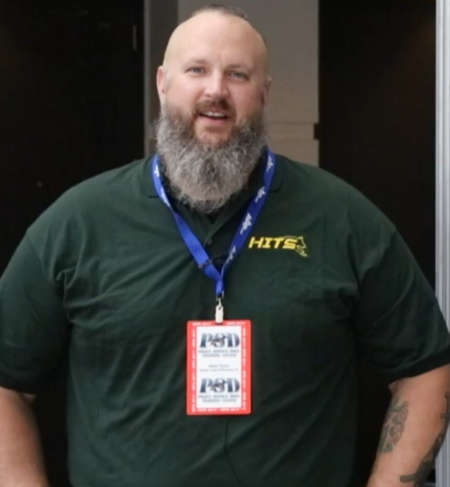
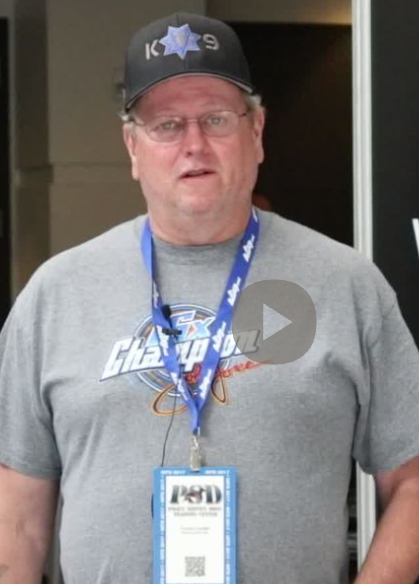
"To the organizers of Handler Instruction & Training Seminar 2026,I was an exhibitor for K9 Tactical Gear Inc at Handler Instruction & Training Seminar 2026. I wanted to express my thanks and appreciation for putting together such a successful event. I had a great experience exhibiting, and everything felt well thought out and organized. I know these events require a lot of hard work behind the scenes, and it showed in how smoothly everything went.Whova was also a great tool to use throughout the event. I relied on it to see who was attending, get updates, and strike up conversations with potential leads. It definitely enhanced my overall experience and helped me make the most out of being an Exhibitor.Best regards,Susan Forbes, K9 Tactical Gear"

"I helped run Twin Oaks Manufacturing’s booth at this event and had such a great time! I especially liked being able to manage our booth profile, see the event schedule, and coordinate demos all through Whova. We had steady traffic and great conversations. Everything ran beautifully, thank you!
"I was part of the Elite Nutrition team and really enjoyed this event, everything was so organized! Having exhibit hall hours and getting live updates in Whova was great. I was never worried I was missing something. We met a lot of attendees and had a fantastic experience. Thanks for hosting!
"Lorem ipsum dolor sit amet, consectetur adipiscing elit. Suspendisse varius enim in eros elementum tristique. Duis cursus, mi quis viverra ornare."
"Lorem ipsum dolor sit amet, consectetur adipiscing elit. Suspendisse varius enim in eros elementum tristique. Duis cursus, mi quis viverra ornare."
"Lorem ipsum dolor sit amet, consectetur adipiscing elit. Suspendisse varius enim in eros elementum tristique. Duis cursus, mi quis viverra ornare."
Secure your seat at HITS 2026
Legal defensibility is not theoretical. It is tested in court.
This class helps handlers and agencies prepare before that moment arrives.

Explore other HITS classes
The Drug Canine Legal Update is one part of a broader HITS program designed to strengthen deployment judgment, detection reliability, and operational decision-making in the field. Additional sessions expand that learning across tracking, behavior, detection science, and tactical leadership.